Do not choose a 4WD for an entire Oman holiday simply because one photograph in the itinerary shows a mountain. Equally, do not book a sedan before checking a destination that requires a particular drivetrain. Start with the routes you genuinely intend to drive, separate optional activities from essential journeys, and compare three complete arrangements: one sedan, one suitable 4WD, or a sedan with separately organised transfers. This guide provides a whole-trip decision method, not permission for off-road driving or a promise that every rental can reach every destination.
Turn the itinerary into a vehicle requirement list
List each accommodation and the vehicle entrance you will actually use, followed by the important day trips. Classify each road journey as an ordinary paved approach, a destination with a specific vehicle requirement, or an unresolved approach needing confirmation. Keep walks, boat journeys and guided activities in a separate column. Their landscapes do not necessarily describe where your rental will travel.
For example, a trip centred on Muscat with a conventional paved Nizwa visit has a different requirement from a stay above the Jebel Akhdar checkpoint. A desert excursion with transport supplied by an operator creates a different decision again from personally driving to remote accommodation. The activity name alone is not enough; identify the point where your own driving ends.
Mark each journey essential or optional. An optional stop with uncertain access should not silently determine the car for ten otherwise straightforward days. Either verify it before booking, arrange another way to reach it or remove it from the rental itinerary. This simple classification prevents the most demanding image in a holiday brochure from becoming an unnecessary vehicle requirement.
When a sedan is a sensible starting point
For a confirmed paved-road itinerary without a special access requirement, compare ordinary passenger cars on comfort, space and the supplier's permission. A destination being inland does not by itself establish a need for four-wheel drive. The Muscat to Nizwa guide is an example of planning around a town visit and a conventional road journey rather than treating all inland travel as a mountain expedition.
Use the real passenger and luggage load. A compact sedan that suits two people with small bags may not suit four adults with rigid suitcases. A larger conventional car can sometimes solve a space problem without adding a drivetrain feature the route does not require. Check the actual offer and loading arrangement rather than choosing from the smallest price shown on a category page.
Transmission preference and driver comfort matter independently of drivetrain. An automatic sedan and an automatic 4WD can both reduce gear-changing work, but their size and controls may feel different. Choose a vehicle the driver can operate comfortably and ask about substitutions where a specific feature is essential. A category name is not a substitute for the configuration actually supplied.
When a confirmed 4WD requirement changes the shortlist
Jebel Akhdar is a concrete reason to investigate a suitable 4WD. Anantara Al Jabal Al Akhdar's current access information says a 4x4 is required at the mountain checkpoint, with driving and vehicle-registration documents. That is a route-specific requirement, not a blanket statement that Oman needs a 4WD. It also does not establish that every rental company permits every journey beyond the checkpoint.
Use the Jebel Akhdar access guide for the detailed mountain checks. For this whole-trip comparison, the key question is how often that requirement affects your own driving. One mountain transfer during a long urban stay and several independently driven mountain movements can justify different transport arrangements even when they visit the same region.
Confirm the actual drivetrain and suitability with the supplier. SUV is a body-style category, not a guarantee of four-wheel drive. Do not assume that a similarly named replacement has the required specification. If the route is essential, record that requirement before paying so a proposed substitution can be assessed against the itinerary rather than only against size or advertised class.
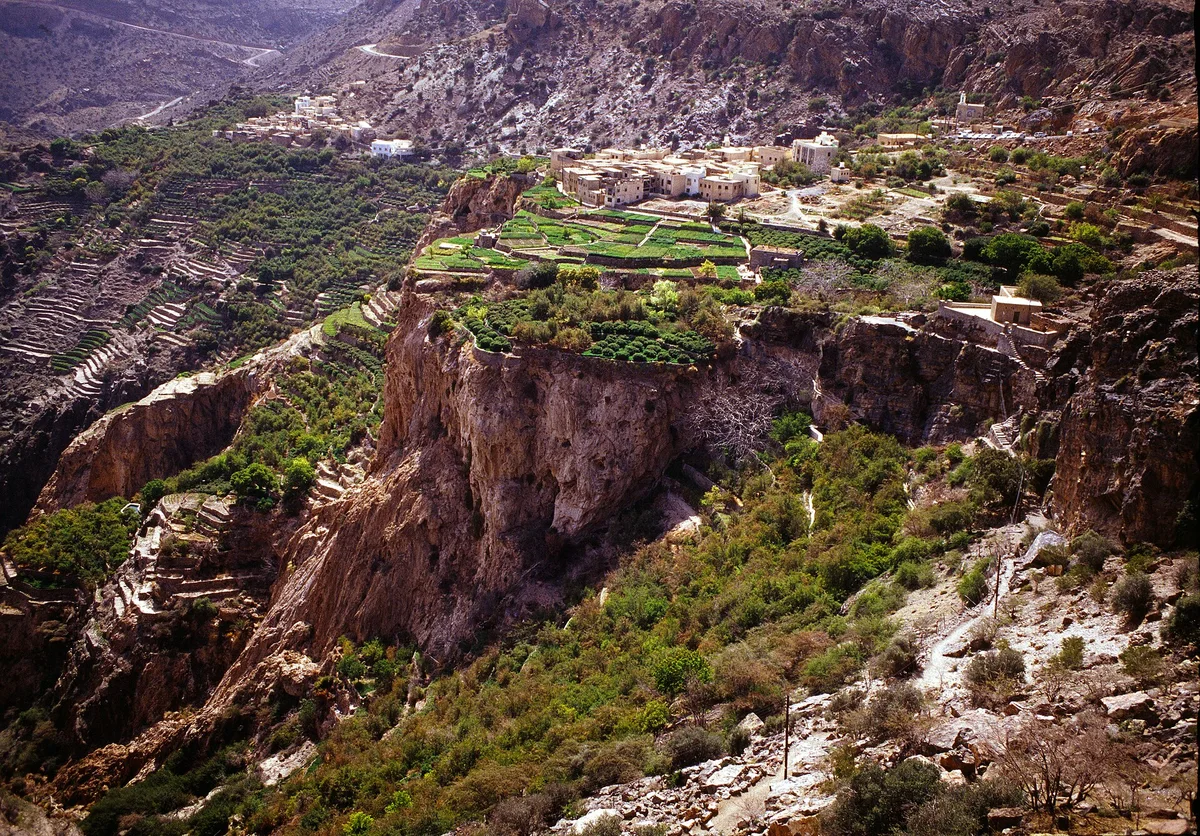
A capable vehicle is not an off-road permit
Localrent's Oman terms allow rental travel only on paved public roads. This distinction is crucial when comparing a sedan with a 4WD: changing the vehicle category does not remove a contractual road restriction. A travel brochure describing desert or mountain experiences is not authorisation from your rental supplier. Do not buy a larger car on the assumption that sand, wadis or tracks become permitted.
Where an activity requires travel beyond the approved rental route, ask the activity operator about a lawful meeting point and suitable separately supplied transport. Resolve where your rental can remain and how you return to it. If the operator's directions or the supplier's answer leave an essential stage unclear, do not treat that gap as a minor detail to settle after arrival.
Permission and protection also answer different questions. An approved paved journey does not mean every type of damage or recovery cost is covered. Read the chosen agreement and use the Oman deposit and insurance guide to distinguish the security amount, excess and exclusions. No-deposit wording does not turn a prohibited route into an insured one.
Compare three complete transport arrangements
Option one is a sedan throughout, with only journeys that suit its confirmed route permissions and specification. Option two is a suitable 4WD throughout, with the same permission checks. Option three is a sedan for the ordinary-road portion plus separate transfers for a defined activity or mountain stay. A fourth possibility, changing rental vehicles partway through, can work but adds another collection and return process.
A transfer quote needs a complete scope: all passengers and luggage, the precise meeting point, one-way or return travel, waiting if required and the procedure for a changed arrival time. The mountain resort's published transfer option demonstrates that a transfer can be investigated; it is not a quotation or reservation for every traveller. Confirm availability and the complete price directly for your dates.
Do not compare a full-week 4WD with a one-way transfer and call the latter cheaper. Include the journey back to the sedan, any parking while it is unattended and the rental days during which you retain it. If changing cars, include both handovers, possible delivery charges and the time they consume. Compare equivalent trips before judging the difference.
| Plan | Main advantage | Main question |
|---|---|---|
| Sedan throughout | One collection for a suitable ordinary-road itinerary | Does every essential approach fit the car and contract? |
| Suitable 4WD throughout | No vehicle change for repeated approved journeys requiring it | Is its extra cost and size useful on enough days? |
| Sedan plus transfers | Separates specialist transport from ordinary rental days | Are both transfer legs and parking confirmed? |
| Two consecutive rentals | Uses a different car only for a defined segment | Do handover time, charges and security overlap erase the benefit? |
Use an actual-quote worksheet, not an invented daily saving
Obtain like-for-like rental quotes for the same dates, pickup, return, drivers and necessary equipment. Record the full price of the sedan and the full price of the suitable 4WD. Add a realistic fuel estimate for each based on your route and the vehicle information available. Keep parking or other costs that are identical in both plans visible, but do not count them twice when comparing the difference.
Subtract the sedan plan's total from the 4WD plan's total. Then compare that difference with the complete extra cost of the sedan-plus-transfer plan, including both transfer legs and any additional parking or handover expense. This gives a break-even comparison without pretending that a generic daily rate applies to your booking. If a required cost is unknown, label it unknown rather than entering zero.
For illustration of the method only, suppose your quote difference is represented by A and your additional transfer arrangement by B. If A is lower than B, the full-trip 4WD has the lower quoted transport cost for that comparison. If B is lower, the mixed arrangement may cost less. Neither result decides driver comfort, permissions or convenience, and neither symbol is a real price or guaranteed saving.
Count unused days and handover time
A vehicle sitting at accommodation still belongs to the rental period. If a mountain stay includes two nights without any independent driving, ask whether a transfer could remove the need to retain a more expensive vehicle for those days. Conversely, repeated planned journeys from that base may make keeping a suitable car more convenient. The answer follows the actual stay pattern rather than the region's name.
Changing vehicles can appear efficient on a spreadsheet while creating a difficult transition. You must coordinate the return inspection, luggage, the next collection and any gap between them. A delayed first handover can affect the second booking. Ask each supplier about its own arrangements instead of assuming that two rentals can be exchanged like keys at the same desk.
Consider funds temporarily committed to security as well. Two consecutive rentals may involve different release timings, so the first deposit may not be available immediately for the second. This is a cash-flow question, not an extra rental charge to invent. Confirm payment eligibility and the required physical card or other accepted method for each actual offer before choosing the split plan.
Do not confuse seat count with luggage capacity
A larger-looking vehicle can still be unsuitable if every seat is occupied and luggage space is limited. Count the bags with the seating layout you will use. Ask about the supplied configuration, especially when a third row or bulky child equipment is involved. A seven-seat description does not guarantee room for seven travellers and their full airport luggage.
For a transfer segment, repeat the same check with the transport provider. Do not solve the rental's luggage problem only to discover that the mountain transfer carries fewer bags. Include mobility equipment, child seats and any special loading needs in the enquiry. The journey has to work at every handover, not just during the longest drive.
For ordinary Muscat days, consider accommodation access and parking alongside cabin space. A vehicle selected for one special outing will also be used in urban settings unless you arrange otherwise. The Muscat driving and parking guide helps assess that part of the trip. More capability is useful only when the complete vehicle remains practical for its everyday tasks.
Test the itinerary against a changed plan
Before paying, ask what happens if the activity that justified the upgrade becomes unavailable. You may still want the 4WD for other confirmed journeys, or the remaining holiday may work with the original sedan plan. Keep this as a planning scenario rather than an assumption that a supplier will swap the vehicle or refund the difference after arrival.
A car booking, hotel stay and transfer can have different amendment or cancellation conditions. Confirm each independently and retain the relevant acknowledgements. Flexible wording does not automatically mean every payment is fully refundable or that changes are free at any time. Avoid building the whole transport chain around an unconfirmed future change to one reservation.
Current access instructions override the planned vehicle choice. Having a suitable 4WD does not permit bypassing a checkpoint or road closure. If a route cannot be used, revise the itinerary with the relevant providers. The purpose of choosing the right vehicle is to support a sensible trip, not to make an ambitious route feel compulsory once money has been spent.
Make the final choice in the right order
First remove arrangements that fail an essential route, vehicle, driver or payment requirement. Then compare complete costs among the remaining options. Finally decide how much you value fewer handovers, independent movement and avoiding an unfamiliar drive. A cheap arrangement that cannot complete the approved itinerary is not a saving; an expensive one is not automatically more appropriate.
Send the supplier a concise itinerary with the actual destinations and uncertain final approaches. Ask for confirmation tied to the chosen car and dates, not a broad statement about travelling in Oman. Keep that reply with the offer details. Where a transfer is part of the plan, obtain its separate meeting and return instructions before making it an essential connection.
You can compare Oman rental cars once the route requirements are clear. Vrenty Car is an independent affiliate guide; Localrent handles the booking and the selected rental company supplies the car. For many travellers the right answer is an ordinary car for ordinary roads. For others a suitable 4WD or a mixed transport plan is justified. Let the verified itinerary, complete quotation and driver's comfort make that decision together.
Distinguish daytime house tours from an evening performance before planning tickets, arrival, parking and your rental day. See the Royal Opera House Muscat by Car: Tour or Performance.